In a world where attention is short and competition is high, strong visual branding is no longer optional — it’s essential.
Your brand isn’t just your logo. It’s the complete visual system that shapes how people recognise, remember and trust you.
Think of it as your brand’s DNA — the structured combination of elements that work together to create a cohesive, professional and instantly recognisable presence.
When your visual DNA is clear and aligned, your brand shows up with confidence everywhere.
Why Visual Branding DNA Matters
Businesses often invest in a logo but overlook the wider visual system that gives a brand real strength.
Clear visual DNA helps you:
- Build instant recognition
- Create consistency across platforms
- Increase perceived professionalism
- Strengthen trust with your audience
- Scale your marketing more efficiently
Without it, brands can feel fragmented, inconsistent and forgettable.
The Core Elements of Visual Branding DNA
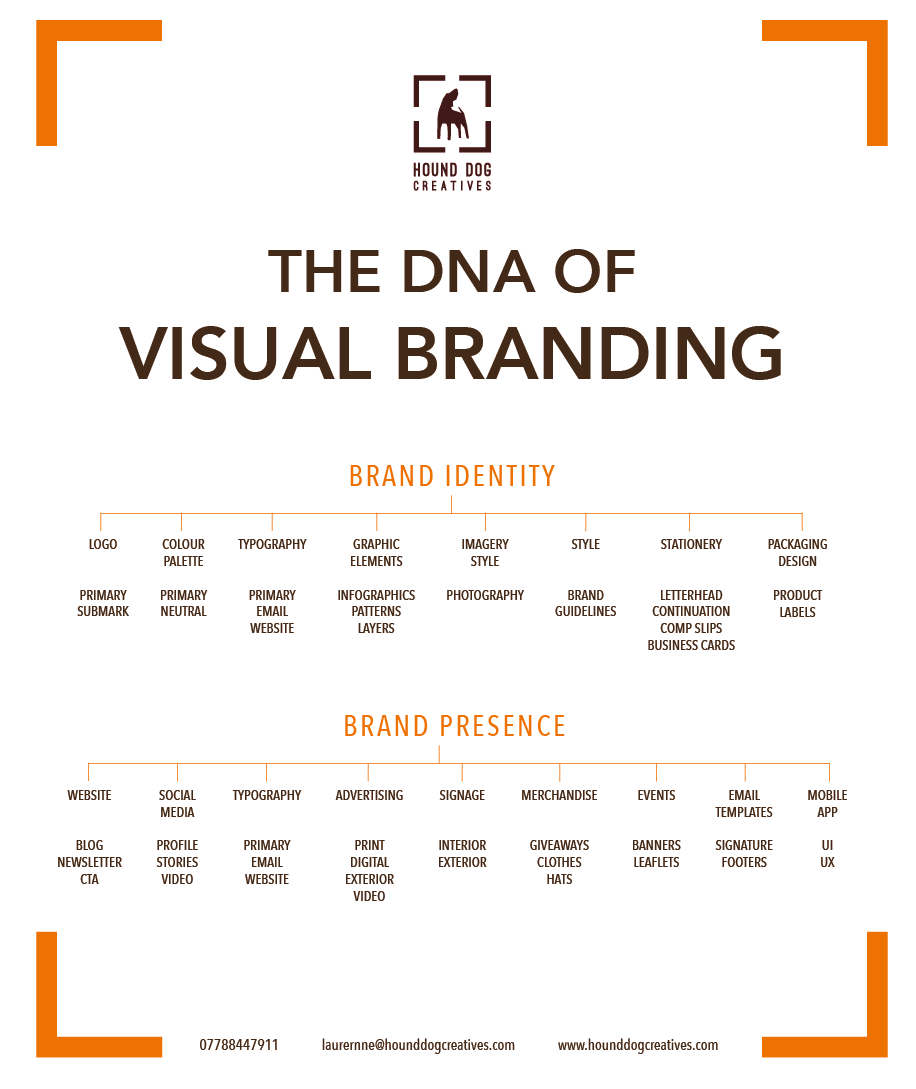
Your visual branding chart brings these essential strands together. Here’s what makes up a strong visual identity system:
1 Logo System — Your Brand Signature
Your logo is the cornerstone of your brand, but one version alone isn’t enough.
A professional logo suite should include:
- Primary logo
- Secondary or stacked version
- Logo marque or icon
- Colour variations
- Clear spacing and usage rules
The goal: flexibility without losing recognition.
2 Colour Palette — Your Instant Recognition Tool
Colour is one of the fastest ways to build brand memory.
A strategic palette typically includes:
- Primary brand colours
- Secondary/support colours
- Neutral tones
- Usage guidance
Why it works: consistent colour use creates visual cohesion across every touchpoint.
3 Typography — Your Brand Voice in Visual Form
Fonts do more than display words — they communicate personality.
Your typography system should define:
- Headline font
- Body font
- Optional accent font
- Hierarchy and sizing
- Web-safe alternatives
Result: polished, readable and on-brand communications.
4 Patterns & Graphic Elements — Your Distinctive Layer
This is where brands start to feel truly unique.
These elements may include:
- Brand patterns
- Icons
- Graphic motifs
- Textures
- Shape language
Why it matters: these details elevate your brand from generic to distinctive.
5 Imagery Style — Your Visual Storytelling
Random imagery is one of the biggest causes of brand inconsistency.
Your imagery guidelines should cover:
- Photography style
- Lighting and tone
- Image treatments
- Illustration style
- Composition approach
The impact: a cohesive, professional visual presence.
6 Style/Layout & Composition — The Hidden Power Player – Brand Guidelines
Often overlooked, layout consistency is what makes brands look premium. These should be encased in the Brand Guidelines.
This includes:
- Grid systems
- Spacing rules
- Alignment
- Social media formats
- Document templates
Why it’s critical: structure creates clarity and professionalism.
7 Stationery Design — Professionalism in Every Detail
Your stationery is often the first physical touchpoint of your brand.
This may include:
- Business cards
- Letterheads and continuation paper
- Compliment slips
- Branded envelopes
- Email signatures
Why it matters: professionally designed stationery reinforces credibility and ensures every communication reflects your brand identity.
8 Packaging Design — Your Brand Experience in Hand
Packaging transforms branding into an experience.
Whether you sell products or send client materials, packaging is a powerful brand amplifier.
This can include:
- Product packaging
- Labels and stickers
- Branded boxes
- Tissue paper or inserts
- Presentation folders
Why it matters: cohesive packaging builds perceived value, strengthens recognition and creates memorable brand moments.
What Happens Without Clear Visual DNA?
If your visual branding isn’t clearly defined, you may notice:
- Inconsistent social media posts
- Marketing that looks DIY
- A lack of brand recognition
- Slower design processes
- Difficulty scaling your marketing
- Mixed messages visually
The business may still function — but the brand won’t perform at its full potential.
How Your Visual DNA Chart Supports Your Brand
Your visual branding chart is more than a graphic — it’s a strategic tool.
It helps you:
- See how every element connects
• Keep your brand consistent
• Brief designers and printers clearly
• Save time on future marketing
• Scale with confidence
• Protect your brand integrity
It turns branding from guesswork into a repeatable, reliable system.
Signs It’s Time to Review Your Visual Branding
It may be time to refine your visual DNA if:
- Your content looks different across platforms
- You’re constantly redesigning from scratch
- Your brand feels dated
- You’re preparing to grow or reposition
- Your marketing lacks cohesion
- You want to appear more premium
Final Thoughts: Strong Brands Are Built Systematically
Memorable brands don’t happen by accident.
They’re built through intentional, aligned visual systems.
When your visual DNA is clear, your brand becomes:
- Instantly recognisable
- More professional
- Easier to scale
- More memorable
- More trusted
Your chart is the blueprint that keeps everything working in harmony.
Ready to Strengthen Your Brand’s Visual DNA?
If your brand feels inconsistent or ready for its next level, now is the time to build a visual system that truly supports your growth.
Let’s bring your brand to life.
Laurenne Dorgan
Hound Dog Creatives
February 2026

Love this Laurenne. Think this is very true and essential. And this is exactly what yiu hsve done for me. I love the new branding you did. Really feels like ‘me’. Highly recommend Laurenne’s services..
Thank you so much Alison for your lovely recommendation – it was a pleasure to work with you on your project!